Sightlines First: Making Ceremony Flowers Work From the Final Row of a Leicester Room
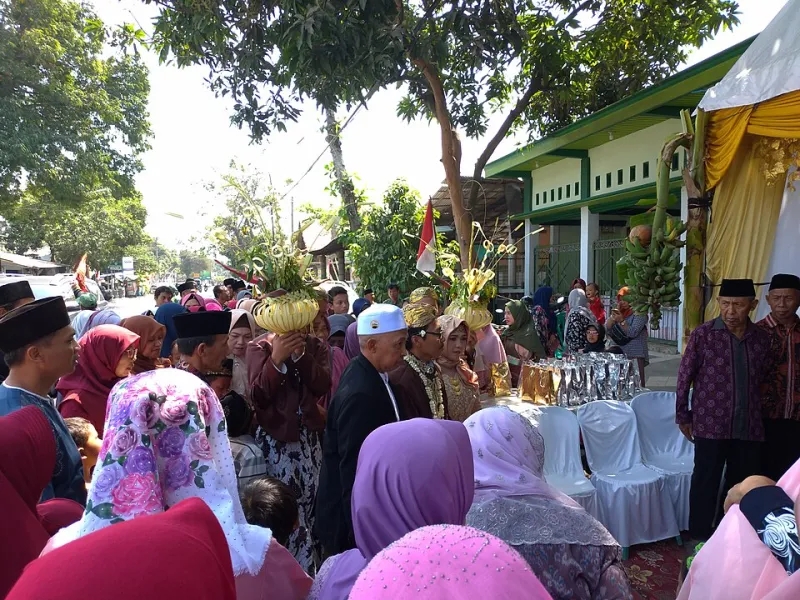
Photo: IrmaRosalina, CC BY-SA 4.0, via Wikimedia Commons
Most couples choose ceremony flowers standing a metre away, usually in a cool studio or over a mood board and a mug of tea. Guests, unfortunately, do not experience the day from a metre away. They arrive at the back of a church, the far end of a barn, or the last row of a hotel suite and form an opinion from there. If the flowers only work up close, the room can feel oddly bare at the exact moment everyone is looking forward.
This is not a call for enormous, expensive installations. It is a call for a quick shift in perspective. Before you sign off the ceremony plan, spend a few minutes thinking like the guest in the final row.
Start with the room, not the bouquet
Ceremony flowers have a different job from table flowers. Centrepieces are viewed from sitting height, close enough to see detail, scent and the odd garden rose. Ceremony arrangements are viewed from a distance, often in poor light, with heads and hats and hymn books in the way. They need shape and contrast more than intricate detail.
The room sets the rules. A high-ceilinged Leicester church with stone walls and deep shadows asks for arrangements with a clear silhouette. A converted barn with dark beams and busy textures needs flowers that separate themselves from the background. A hotel ceremony room with pale walls and low ceilings can take softer, wider shapes without feeling crowded. None of these rooms is difficult; they simply need different things from the flowers.
When you visit the venue, stand at the back. Not near the back, not by the doors while the coordinator is talking. Actually walk to the furthest guest seat and look towards where you will stand. Notice what you can see. Notice what disappears. That view is the one half your guest list will have.
The focal points that earn the budget
If money is tight, ceremony flowers should follow attention. Guests look at three things: the entrance, the aisle as you walk, and the place where you stand. Everything else is supporting cast.
The entrance
The entrance is the first flower moment and the one every guest passes. A simple mark of occasion works well here: a pair of arrangements either side of the doorway, a garland over a lintel, or a generous posy on a welcome table. It does not need to be tall, but it should be clear. From outside, in coats and confusion, guests should clock that something is happening.
The aisle
Aisle flowers are lovely and often over-budgeted. From the back row, a line of small posies down the aisle can read as dots. That is not a disaster, but it is worth knowing. If you want the aisle to feel decorated from a distance, choose fewer, larger marks rather than many small ones. Two or three arrangements at the start, middle and end can do more than twelve tiny jars. Alternatively, put the money into the aisle ends nearest the front, where photographs and guests’ attention naturally land.
The altar or arch
This is the big one. The backdrop behind you is the ceremony’s main event in visual terms. It is also where scale matters most. A delicate arrangement that looks generous in a studio can vanish against a tall church east window. A low, wide arrangement can be perfect in a barn where the ceiling is already busy. The trick is not always to go higher; it is to go stronger. Bigger blooms, bolder foliage, and a clear shape will read further than a cloud of pale, wispy stems against a pale wall.
Height, width and the problem of heads
At a standing ceremony, guests see the top half of you and whatever is behind you. At a seated ceremony, they see a row of shoulders, hats, and the occasional tall uncle. Flowers placed low can disappear entirely. Flowers placed very high can look disconnected from the couple.
The useful middle ground is an arrangement that starts around waist height and rises to shoulder or head height, or a wide low piece that spills out beyond the couple’s silhouettes. In churches, check whether the altar rail, steps or lectern will block a low arrangement. In barns, check whether beams or hanging lights will compete with anything tall. In hotels, check whether the ceremony backdrop is a plain wall, a window, or a folding partition that may or may not be fully closed.
A quick trick: stand where you will say your vows and ask a friend to sit in the last row. Get them to take a photo with their phone, not zoomed in. The resulting image is a decent approximation of what the room sees. If the flowers read as a smudge, a gap, or a lovely but tiny detail, adjust.
Simple checks before the final order
You do not need a landscape architect. You need a few honest checks.
- Stand at the back of the room and squint slightly. Can you tell where the ceremony is happening? If not, the flowers are not doing their job.
- Look at the ceremony backdrop next to the walls, windows and floor. Does it separate itself, or melt into the background?
- Check the aisle from the back. Do the arrangements create a rhythm, or a scattering of dots?
- Ask what will be between the guest and the flowers: pillars, pews, speakers, table plans, a band’s empty stage. Flowers do not need to fight these things, but they should be planned around them.
- Consider the light at the time of ceremony. Grey November light and bright July windows change how colour reads. Deep greens, strong whites, and warmer tones often hold up better from a distance than very pale, subtle mixes.
A sensible Leicester compromise
Most couples cannot afford to make every arrangement a statement piece, and they do not need to. A practical plan is to spend on the backdrop and the entrance, keep the aisle simple, and let the room do some of the work. If the church is already beautiful, you are adding punctuation, not rewriting the text. If the barn is a blank box, the ceremony backdrop has to carry more weight.
The back-row test is not about impressing people with enormity. It is about making sure the day reads properly from every seat. Choose flowers that hold their shape, place them where people actually look, and check the view from the cheap seats. The front row will still get the detail. The last row deserves the picture.