Cloud Cover, Clear Colour: Choosing Leicester Wedding Flowers That Thrive in Grey Light

Photo: random flotsam, CC BY 2.0, via Wikimedia Commons
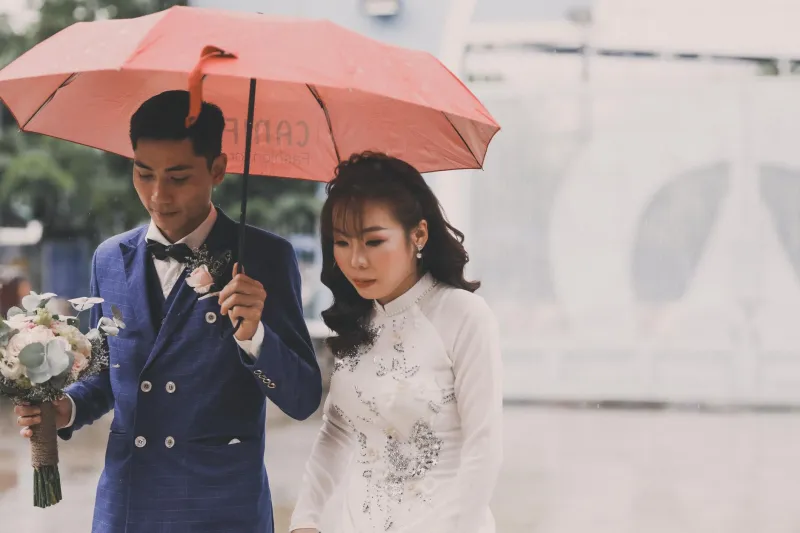
Leicester weddings rarely come with a guaranteed blue sky. What they do come with is often a soft, silver, slightly damp kind of light that can be lovely to stand in and tricky to photograph. The good news is that grey light is not the enemy of wedding flowers. It is basically a giant softbox. The trick is choosing blooms that keep their shape, colour and detail when the sun decides to sit the day out.
Why overcast light changes the flower game
Hard sunlight creates drama, but it also creates shadows. Overcast light flattens everything out. That can be flattering for skin and forgiving for nerves, but it can turn a delicate pastel bouquet into a vague blur if there is not enough contrast or texture to hold the eye. In Leicester, where the forecast can change its mind between the ceremony and the speeches, it pays to plan for the grey default rather than hope for a heatwave.
The aim is not to fight the light. It is to give the camera something to grab hold of: depth, structure, variation and a bit of bite.
Build a palette with contrast, not just colour
A bouquet made entirely of pale pink, pale peach and pale cream can be beautiful in person and strangely washed out on camera under cloud. The fix is not to abandon soft colours. It is to add a darker or brighter anchor so the lighter tones have something to sit against.
Think in terms of contrast rather than a single colour scheme. Burgundy dahlias with cream roses. Deep plum calla lilies with white anemones. Burnt orange ranunculus with a cool slate-blue delphinium. Rich berry tones with soft blush. Even a mainly green and white scheme benefits from a darker green leaf or a near-black scabiosa pod to stop it looking like a cloud of nothing.
If your venue has dark wood panelling, exposed brick or deep-painted walls, test your palette against those surfaces. A bouquet that looks crisp against a white wall can disappear against a dark oak beam. The reverse is also true. Leicester has plenty of venues with characterful interiors, so it is worth asking what your flowers will be standing in front of for the group shots.
Texture is your secret weapon
When colour goes flat, texture does the talking. Blooms with visible detail photograph beautifully in soft light: scabiosa with its pincushion centres, astrantia with its papery star shapes, nigella with its fine tracery, double tulips with their layered petals, stocks with their ruffled spikes, veronica with its tight little cones. Seed pods, grasses and dried elements can add a different kind of detail without making the bouquet look like a craft project.
Texture also helps with movement. A bouquet that has a mix of round, spiky, fluffy and trailing shapes reads more clearly in a photograph than a tight ball of identical blooms. That variety gives the camera more to describe, even when the light is doing very little.
Let greenery do more than fill gaps
Greenery is not just the cheap bit around the edges. In grey light, foliage can be the thing that gives a bouquet its shape and depth. Mix leaf sizes and finishes rather than using one uniform eucalyptus. Deep green bay, olive branches, ferns, ivy, rosemary and softer grey-green foliage all behave differently on camera.
A word of warning: too much silver-grey foliage in a grey-lit photograph can blend into mush. Use it as a supporting act rather than the whole cast. Darker greens and varied leaf shapes create contrast and help lighter flowers pop.
Run a five-minute phone test before you commit
You do not need a professional camera to learn a lot about how flowers behave in low light. Ask your florist for a small sample or bring a posy to your venue on a viewing. Take photos on your phone at different times of day, near the windows and away from them. Turn off any beauty filter and avoid heavy editing. Look at whether the flowers still have shape and whether the colours separate from each other.
The wall test is just as useful. Hold the bouquet against the walls, curtains and backdrops where you will actually be photographed. If everything blurs into one tone, add contrast. If the flowers look busy and chaotic, simplify.
Have a proper chat with your photographer
A good wedding photographer will have opinions about light, and they are worth listening to. Ask how they handle overcast days, whether they use flash or reflectors, and whether they are happy to do a quick test with a sample bouquet. Some will welcome it. The best ones may suggest it before you do.
Also ask about editing. A photographer who understands colour will know how to keep deep reds from going muddy and whites from blowing out. But it is far easier to start with flowers that already hold their own than to fix a flat palette afterwards.
Check the venue lighting, not just the weather
Grey skies are only half the story. Church interiors, marquees, festoon lights and LED uplighting can all change how flowers look. Warm uplighting can make cream flowers look yellow and blue flowers look grey. Cool lighting can make reds look purple. Ask your venue what lighting will be on during the ceremony and reception, and whether it can be dimmed.
If your venue has stained glass, dark corners or a marquee with a mixed lighting setup, bring a sample bouquet along to your final meeting. Photograph it in the actual spots where you will be standing. It is a small bit of effort that saves a lot of guessing.
A seasonal shortlist that photographs well
In spring, look at tulips, ranunculus, anemones and narcissi. In summer, dahlias, cosmos, scabiosa and stock are reliable. Autumn brings dahlias, berries, seedheads and rich-toned foliage. Winter offers hellebores, amaryllis, evergreen and forced bulbs. British-grown flowers are often conditioned for local conditions, which helps them hold up on the day.
The main thing is to choose flowers for structure and detail as well as colour. A bouquet does not need sunshine to be photogenic. It needs contrast, texture and a little rehearsal. Do that, and a grey Leicester sky can end up looking like a bonus rather than a compromise.