A Bit of Drizzle, a Lot of Plan B: Weather-Ready Wedding Flowers in Leicester
Start with the forecast, but don’t plan around it
A Leicester wedding in any month can serve up four seasons before the speeches. You might get a bright morning in Bradgate Park, a sharp shower over the city centre and a humid marquee by evening. That does not mean your flowers are doomed. It means the plan needs a bit of give in it.
The useful starting point is not a list of flowers that never wilt — no such list exists — but a honest conversation about where the flowers will actually spend the day. A church porch, a canal-side courtyard, a village hall with the doors propped open and a marquee with the heating on are four different climates. Treat them that way.
Choose stems that can take a bit of weather
Delicate, papery blooms are lovely until the first sideways drizzle. For outdoor moments and mixed weather, lean towards flowers with firmer petals and sturdier heads. Chrysanthemums, carnations, alstroemeria, calla lilies, orchids, eryngium, hypericum berries and structured foliage such as eucalyptus, olive, birch and ferns all tend to hold their shape better than sweet peas, nigella, poppies or big blowsy peonies.
That does not mean you have to abandon the soft, romantic look. Garden roses can work if they are conditioned well and kept out of direct rain, but ask your florist to choose varieties with tighter heads and avoid opening them too far in advance. Dahlias are beautiful and very Leicester-market-friendly in late summer, though their petals bruise if they are handled wet or crammed into a bucket. Lisianthus is elegant but can spot in humidity, so it is better for a covered entrance than an exposed arch.
Seasonal British flowers are still worth using. Just be realistic: a wet June can make ranunculus and peonies more temperamental, while September brings dahlias, chrysanthemums and berries that often shrug off a grey day. Your florist should be honest about what is looking good in the week of the wedding rather than sticking rigidly to a mood board made in January.
Mechanics matter more than the mood board
A flower that is beautiful in a cool studio can collapse on a damp day if the mechanics are not up to it. For outdoor arrangements, ask how the flowers will be anchored. Weighted containers are better than lightweight vases on a windy day. Shepherds’ hooks look charming but can wobble on soft ground, so use them with care or choose ground-level arrangements instead.
For arches and welcome signs, check that the structure is secured to something solid. Cable ties, bind wire and hidden water sources are not glamorous, but they are the difference between a relaxed day and a dash across the lawn with a collapsing arrangement. If the flowers are in foam, ask whether it is properly soaked and whether the arrangement can be moved without shedding. If they are in water, ask how the reservoir stays full and upright.
Bouquets need a wet-weather plan too. A ribbon-wrapped handle can become slippery, and exposed stems can bruise if the bouquet is put down on a damp surface. Ask for a hidden stem wrap and a spare bouquet that can sit in water at the venue. For buttonholes, magnets or a discreet pin can be more secure than a single pin on a windy day. Keep a small box with spare stems, scissors, florist tape and a cloth in the getting-ready room — it sounds fussy until it saves the photos.
Plan the outdoor ceremony in layers
If you are hoping for an outdoor ceremony, think in layers rather than one all-or-nothing setup. The first layer is the dream: an arch, aisle markers, petals and a backdrop. The second layer is the covered version: the same flowers moved to the entrance, porch or indoor focal point. The third layer is the emergency version: a couple of statement arrangements that can be lifted into place quickly.
Aisle markers in weighted pots are easier to move than long runner arrangements. Loose petals on wet grass can turn into a slippery mess, so keep them for a paved aisle or skip them altogether. If confetti is part of the plan, check the venue’s rules and choose larger, drier petals that will not clump in the damp. A basket of fresh petals left in the porch is kinder than handing guests handfuls in the rain.
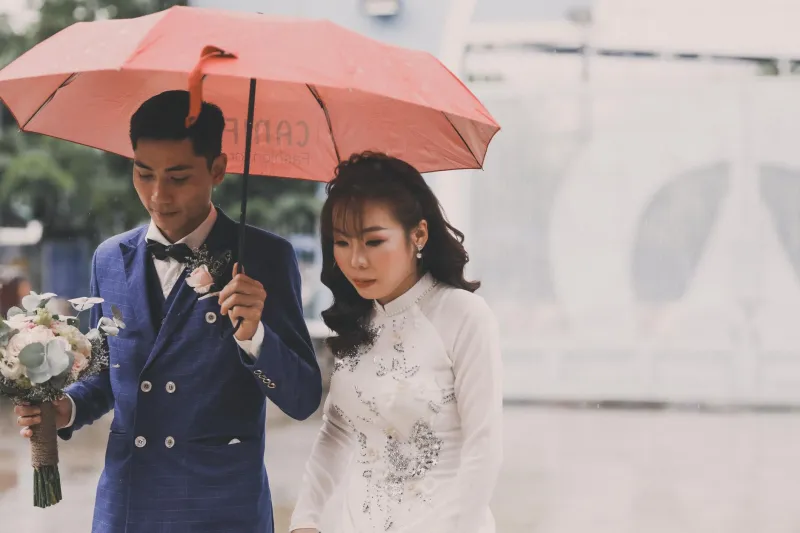
For photos, wet weather can actually be a gift. Covered cloisters, church porches, marquee entrances and even a clear umbrella can make lovely frames. Ask your photographer to scout two or three covered spots near the venue, and ask your florist to provide a small arrangement or posy that can be carried to those spots without wilting. A simple bouquet in the foreground of a rainy window can look far more considered than a forced dash across a lawn.
Keep humidity and wind in mind indoors
A humid marquee can be harder on flowers than a light shower. Airflow helps. Ask the venue about doors, fans and heating, and keep arrangements away from direct heat or sunny windows. Misting is rarely the answer — it can encourage spotting and mould — but clean water and a cool overnight store are. If the marquee is being dressed the day before, ask who will top up the water and check the flowers on the morning of the wedding.
Wind is the other quiet troublemaker. Tall arrangements on tables near open doors can be knocked over, and lightweight signage can take off. Choose lower centrepieces for exposed areas and put the tall, dramatic pieces where they are sheltered. If you are using candles, make sure they are in glass or lanterns; a gust and a naked flame are not a good combination.
Questions to ask before the 2026 season
Before you confirm your flowers, ask your florist how they handle wet-weather days. Do they bring spare stems? Can they provide a second bouquet or extra buttonholes? What is their delivery and setup window, and who moves arrangements if the ceremony moves indoors? Ask whether the price includes breakdown or whether someone needs to collect hired containers and stands.
Ask the venue the same sort of questions. Where can the florist park and unload? Is there covered storage? What are the rules on fixing things to walls, arches or tables? Who has the final say on moving flowers? If the ceremony is outdoors, what is the cut-off time for deciding to move inside? A good venue will have a rain plan already; a good florist will know how to make it look intentional rather than like a rescue mission.
Finally, build a small weather contingency into the budget. It does not need to be dramatic — an extra 10% for spare stems, a second bouquet or a couple of weighted containers is often enough. The goal is not to beat Leicester weather. It is to make sure that whatever the sky does, the flowers still look like they belong there.